

Lighting affects not only how well we can see indoors, but also our alertness and natural circadian rhythm. While it’s important to have enough light during the day, in the evening it’s best to adjust its intensity and character to suit more relaxed activities. Architect Gabriela Brixová of Tempus Design explains what to consider when designing lighting, why it’s not enough to choose based solely on warm or cool colors, and how to create a lighting environment for different times of the day.
What Does "Healthy Lighting" Mean?
Above all, lighting that suits what we need to do at any given moment while also respecting the natural rhythm of the day. We need to see clearly when working, cooking, or reading, but we also need to be able to create a calmer environment for evening relaxation.
From an interior design perspective, it is therefore important not to focus solely on the output of individual light fixtures. We also consider their placement, intensity, the quality of the light, the ability to adjust them, and how the lighting complements natural light. A healthy lighting environment is not a single specific light fixture or a one-size-fits-all setting that would be ideal for everyone at all times of the day.
How Light Affects the Body
In addition to its visual functions, light also has what are known as non-visual effects. It helps the body regulate its circadian rhythm and influences processes related to wakefulness and sleep. It is particularly important how much light we are exposed to during the day and evening, and at what times.
Expert recommendations therefore emphasize getting enough light during the day and significantly reducing light exposure in the hours before bedtime. This does not mean that every evening light source is harmful, nor that there is a single “correct” level of light for everyone. However, when designing interiors, we can create conditions that do not unnecessarily interfere with our natural circadian rhythm.
Why Is Daylight So Important?
Daylight is a natural part of the environment in which the human body evolved. Its intensity and spectral composition change throughout the day, and it is precisely these changes that help the body distinguish between day and night. Furthermore, spending time in a well-lit space improves conditions for everyday activities and can positively influence one’s subjective sense of well-being.
When designing an interior, we should therefore avoid unnecessarily limiting natural light. It is important to take into account the orientation of the windows, the floor plan, shading, and the placement of furniture. Artificial lighting should complement natural light, not be a reason to stop paying attention to it.
Is warm light healthy and cold light unhealthy?
It’s not that simple. Color temperature describes the color appearance of light, but by itself it does not account for all of its biological effects. Two light sources with the same color temperature may have different spectral compositions and may also differ in intensity.
Warmer light is often pleasant for creating an evening atmosphere, while more neutral or cooler light may be better suited for certain work activities. However, this does not mean that warmer light is automatically healthy and cooler light is harmful. It always depends on the specific light source, the amount of light, the time of day, and how it is used.
Light for work and light for relaxation
When we work, we need, above all, sufficient light for the specific task at hand, good visibility, and minimal glare. It depends on whether we’re working with documents, a computer screen, fine details, or perhaps cooking. A single universal setting may not be ideal for all of these situations.
In the evening, we usually try to create a calmer environment. This can be achieved by dimming the lights, using task lighting, and avoiding unnecessarily bright light before bedtime. That doesn’t mean we have to stay in the dark—the important thing is that the lighting is appropriate for the activity and isn’t brighter than we need it to be.
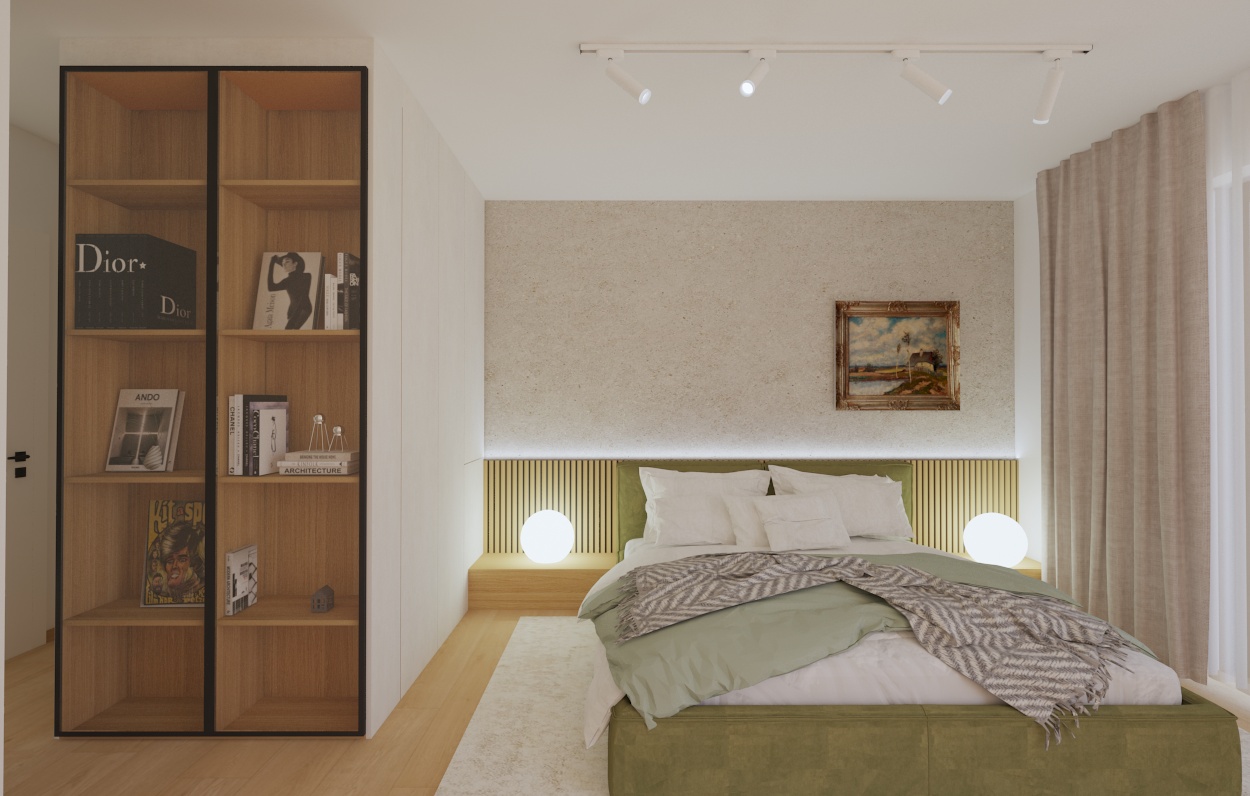
How to Design Bedroom Lighting
In the bedroom, I would separate the lighting for everyday activities from the lighting intended for evening relaxation. For example, we need to get dressed comfortably, tidy up, or find things in the closet, but we also need to read in bed and get ready for sleep. A single ceiling light may not adequately meet these different needs.
It’s practical to combine general lighting with bedside lamps and, if desired, with lighting inside the closet. The advantage is the ability to control each light separately and adjust its brightness. A warmer light tone is often suitable for evening use, but it’s also important that the light source doesn’t shine directly into your eyes and that the controls are easy to reach from where you’re resting.

Home Office and Eye Strain
The key is to have a properly lit workspace and to minimize glare and distracting reflections on the screen. A ceiling light alone may not be sufficient, especially if the desk is located in a darker part of the room. Therefore, it’s a good idea to supplement it with a task lamp that can be adjusted as needed.
We should also consider the position of the window, the orientation of the monitor, and whether direct sunlight is shining into our eyes. The lighting should be sufficient, but even and comfortable. When working for long periods, it’s also important to take breaks and shift your focus—choosing the right light fixture won’t solve all eye problems.
What Does the Spectrum of Light Mean?
Light consists of various wavelengths, which together determine its spectral composition. The human eye perceives these as the color of light, but the spectrum also plays a role in non-visual biological effects. Color temperature alone, therefore, does not fully describe the properties of a light source.
When selecting lighting fixtures for everyday use, households do not need to take complex measurements. However, it makes sense to choose high-quality fixtures from trusted manufacturers, taking into account color rendering, dimmability, and suitability for specific activities. If the goal is to optimize lighting conditions in a truly professional manner, it is necessary to evaluate more parameters than just the information on the packaging regarding warm or cool color temperature.
Is smart lighting worth it?
This can be useful, especially if it allows you to easily switch between different lighting scenes. During the day, we may need brighter lighting; in the evening, softer lighting; and at night, just a very subtle light to help us find our way. Smart controls can simplify and automate these changes.
However, automation alone does not guarantee that the lighting is properly designed. What matters is the quality of the light sources, appropriate placement, sufficient brightness for specific activities, and the ability to control the lighting according to users’ actual needs. Sometimes, simple dimming and a few separate circuits can also be very useful.
What to Look for When Buying Light Fixtures
In addition to appearance, I would consider the luminous flux, color rendering, dimming capabilities, compatibility with a dimmer, and information about the manufacturer. It’s also important to assess whether the light fixture is suitable for the intended activity and whether it will cause glare.
There’s no need to get bogged down in technical specifications, but you shouldn’t base your choice solely on price or color either. If you’re unsure, it’s a good idea to consult an expert and address the lighting design at the same time as the layout and overall interior concept.
The most important rule: the ability to adjust the lighting
In the morning, during the workday, and in the evening, we have different needs, and we also use each room in different ways. That’s why it’s a good idea to combine natural light with several layers of artificial lighting and control each circuit independently.
Good lighting doesn't have to be complicated. However, it should be well thought out so that it helps us with our daily activities and creates a pleasant environment for relaxation in the evening.
"Light in Interiors" Series · Episode 4 of 4
The Entire Series: Lighting Starts with the Orientation of the House · One Light Isn't Enough · A Chandelier as a Jewel of the Interior.
Tempus Design Studio
Do you want lighting that fits your lifestyle?
A no-obligation consultation with Tempus Design can be the first step toward a well-thought-out interior design.
Frequently Asked Questions
What color of light is best for an apartment?
It depends on the room, the activity, and the time of day. Warmer light is often used to create an evening atmosphere, but the color of light alone does not determine its overall quality or biological effects.
What kind of lighting is best for a bedroom?
A combination of general lighting, task lamps, and the ability to adjust the brightness is ideal. In the evening, lighting that is neither unnecessarily bright nor glaring is best.
What does a high-quality light spectrum mean?
Spectral composition describes the proportion of different wavelengths in light. It affects the light's color and is also important for certain non-visual biological effects.
Does dim lighting help in the evening?
Lower light intensity in the hours before bedtime may help minimize disruption to the natural circadian rhythm. However, this also depends on the light spectrum, duration of exposure, and other factors.