

A terrace or balcony can serve as a full-fledged extension of your apartment if it’s designed with the same care as the interior. Key elements include designated zones, comfortable seating, suitable plants, lighting, and materials that complement the interior. How can you create a terrace that can be enjoyed from spring through fall? We asked Eliška Paták, an exterior design specialist at Tempus Design.
A patio requires the same planning as a living room
How do you approach terrace design today?
Just like when designing a living room, a patio must have distinct zones, pleasant lighting, high-quality materials, and comfortable seating. Plants are also important, and we must take into account the climatic conditions on the patio, especially since plants on patios are grown in containers. Even on a south-facing balcony or patio, carefully selected plants can create a pleasant, shaded spot in the summer.
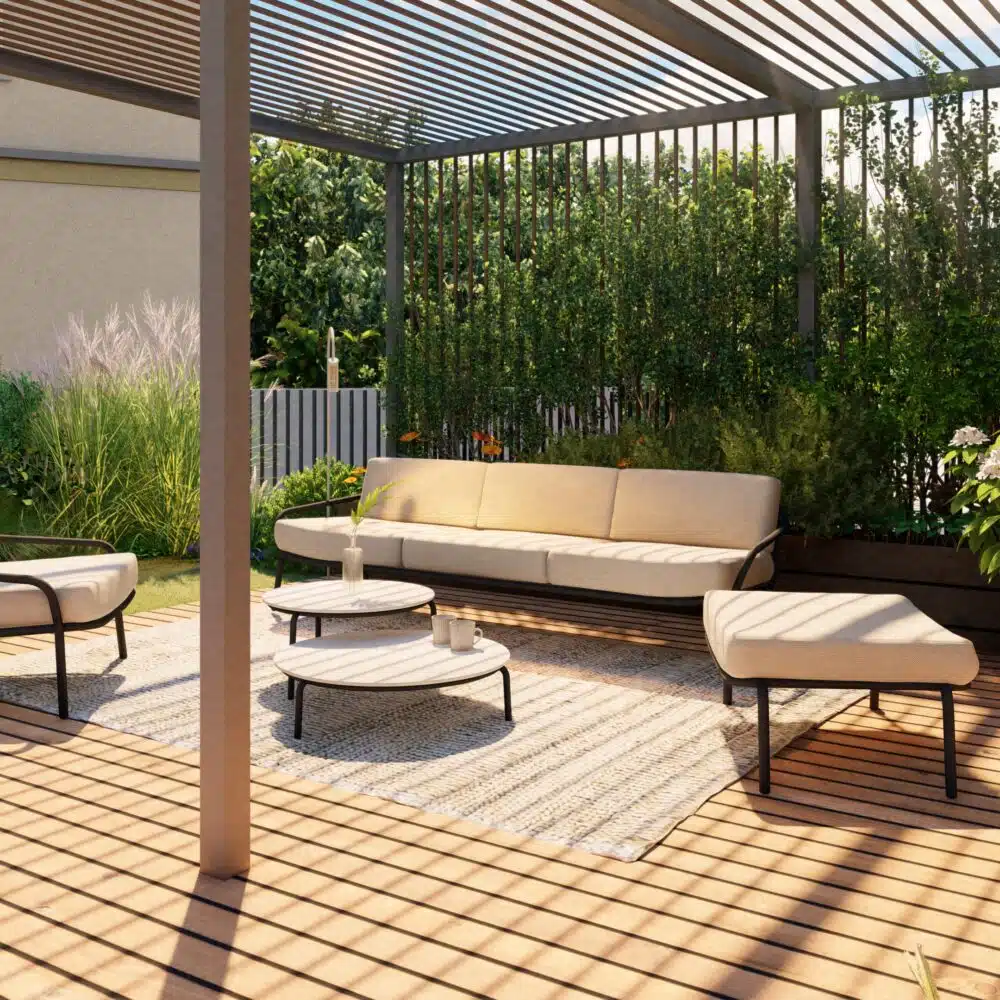
How to Connect the Patio to the Interior
How do you achieve harmony with the interior?
We use the same or similar materials, creating continuity in both color and texture. Often, the same shade of stone or large-format tiles used indoors continues outdoors. This creates the impression that the two spaces are connected.
Terrace lighting sets the mood in the evening
What role does light play?
Enormous. What matters isn’t just how the terrace looks during the day, but also how users can enjoy it in the evening and at night. Today, the trend is toward indirect lighting of greenery, LED strips in the floor, or backlit benches. This creates an atmosphere and sense of comfort in the evening similar to what light can conjure up in a well-designed interior. Today, outdoor spaces are an extension of the home, offering people the chance to enjoy the outdoors while still being in their own private space.
The Garden Series · Episode 17
How can you ensure privacy in your garden without tall fences? Continue to Part 18 on privacy and views. Previous part: Garden and interior design as a single whole.
Tempus Design Studio
Would you like a patio that doubles as an additional living space?
Tempus Design Studio helps with interior, patio, and exterior design so that the individual parts of the house form a cohesive whole. The initial consultation is free of obligation and available throughout the Czech Republic.
Frequently Asked Questions
How to Design a Patio as a Second Living Room?
According to Eliška Paták, it is important to design a patio much like a living room—creating separate zones, ensuring pleasant lighting, using high-quality materials, providing comfortable seating, and selecting appropriate plants.
How can you connect the patio to the interior?
A sense of continuity can be created by using the same or similar materials, colors, and textures. According to Eliška Paták, for example, the same shade of stone or large-format pavers can extend from the interior to the exterior.
What plants are suitable for a sunny patio?
On a south-facing terrace, carefully selected plants can create a pleasant, shaded spot. According to Eliška Paták, when making your selection, it is important to take into account the specific climatic conditions of the terrace and the fact that the plants are grown in containers.
How can I light up my patio in the evening?
Good options include, for example, indirect lighting of greenery, LED strips in the floor, or backlit benches. According to Eliška Paták, this can create an atmosphere and sense of comfort similar to that found in a well-designed interior.