

A hotel’s interior must not only be beautiful, but also exceptionally durable and technically sophisticated. The architect must address fire safety, the fire resistance of materials, hygiene standards, evacuation routes, technology, and daily wear and tear. What may work perfectly well in a private apartment may not be suitable for a hotel at all. The final installment in our series on hotel design.
Hotel furnishings must be more durable than home furniture
“When we design a private interior, we know who will be living there. With a hotel, we’re designing a space for hundreds of different people. That fundamentally changes the way we think about materials and layout,” says architect Gabriela Brixová of the Tempus Design architectural firm.
Dozens or even hundreds of guests come and go at the hotel every day. As a result, the furniture, floors, bathrooms, and doors are subjected to much greater wear and tear. “The material has to look good, but it also has to be durable. We have to consider its lifespan, maintenance, and repair options.”
- floors
- upholstery
- furniture
- door
- bathroom surfaces
- workspaces
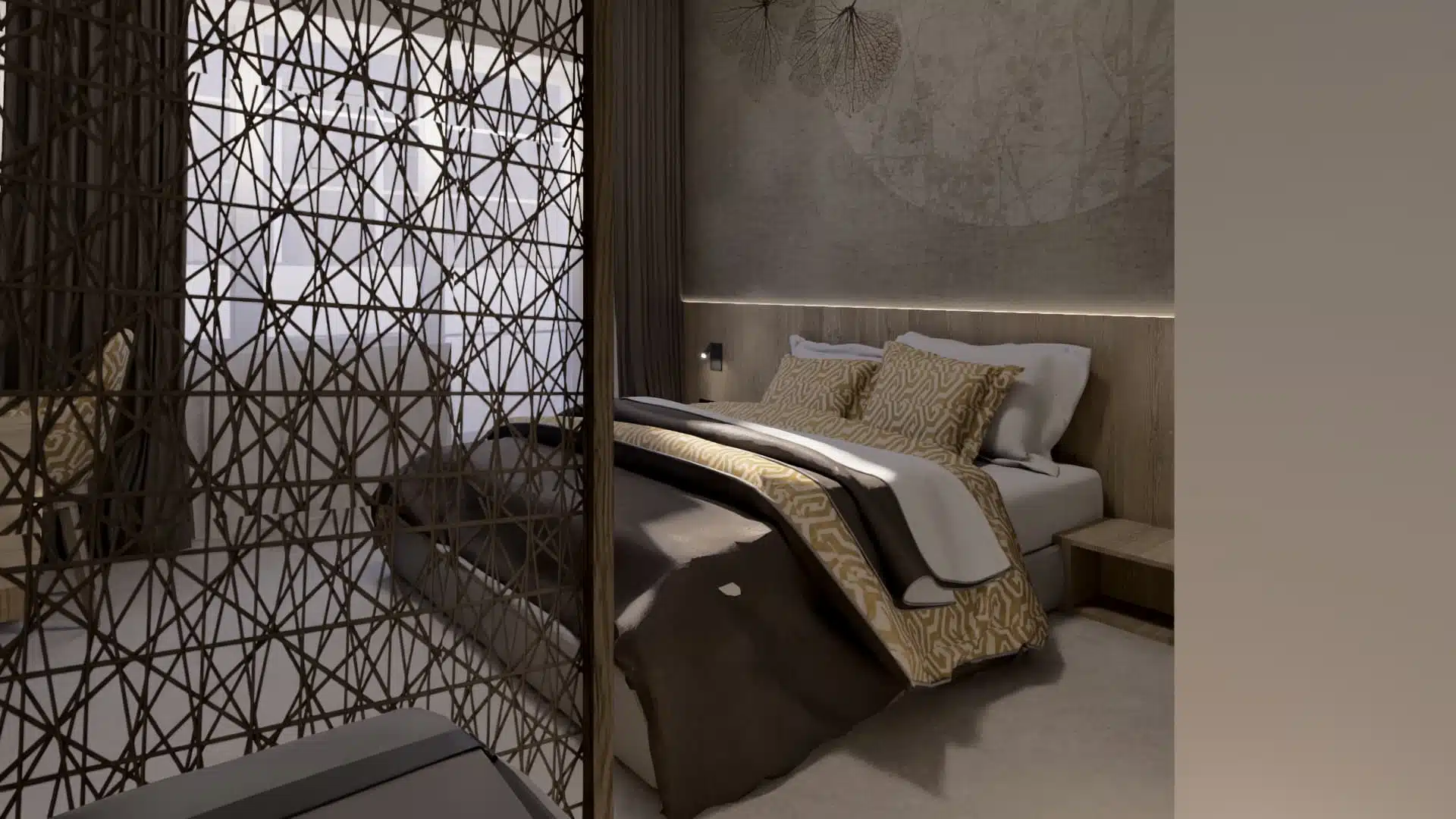
Why You Can't Use Everything That Works in an Apartment at a Hotel
One of the main differences is the strict technical standards. For example, a hotel must meet requirements regarding fire safety, the non-flammability of materials, evacuation procedures, hygiene, and food service operations.
“An architect has much less room for improvisation. We can’t choose a material just because it’s beautiful. We have to verify that it meets all the technical requirements.”
A historic hotel is an even greater challenge
The situation is more complicated when renovating a historic building. The architect must balance current building codes with the preservation of the original structures.
“In older buildings, we can’t always use the same technical solutions as in new construction. We have to look for alternatives that ensure safety without compromising the building’s historical value,” adds the architect.
A hotel room must be comfortable even in a small space
Another major consideration is space. Hotel rooms are limited in size, but guests expect a high level of comfort. The architect therefore addresses the placement of the bed and the space around it, luggage, storage areas, a work area, the bathroom, and lighting.
"A hotel room must offer everything a guest needs, but it mustn't feel cramped. That often comes down to very careful layout."
Why Is Lighting So Important in a Hotel?
Lighting has a significant impact on a hotel’s atmosphere. A hotel room, reception area, restaurant, hallway, wellness center, and bathroom each require a different lighting style.
Therefore, an architect does not simply consider the number of light fixtures. The intensity and color of the light, the ability to adjust it, helping guests find their way around the space, creating the right atmosphere—and the ability to control the lighting from different locations in the room—are also important.
"Guests need to have enough light where they need it—for example, at their workspace or in front of the mirror. At the same time, though, we don't want the room to feel like an office."

Sustainability also means a long service life
Contemporary hotel design increasingly incorporates eco-friendly principles. One of these is the use of durable materials.
“Sustainability isn’t just about using natural materials. If you have to completely throw out the interior and replace it with a new one in a few years, that’s not sustainable in the long run.”
Therefore, durability, reparability, recyclability, maintenance, and the reduction of single-use materials are important.
Hotel design is a balance between creativity and rules
"Perhaps that's what's most interesting about hotel projects. There are a lot of rules you have to follow, but you still have to create something that's beautiful and memorable."
According to Gabriela Brixová, a high-quality hotel interior is created when guests are completely unaware of the technical aspects. They see only a comfortable and beautiful space. Behind it, however, lie dozens of decisions regarding materials, technologies, safety, operations, and layout.
“In my opinion, that’s the mark of good architecture. When everything works so naturally that the guest doesn’t even stop to think about how much work went into the result.”
Hotel Design Series · Part 4 of 4
The entire series: Hotel design isn't just about beautiful rooms · A hostel was transformed into the Benedict boutique hotel · Hotel wellness is no longer just an extra luxury. See the projects in the Hotels section.
Tempus Design Studio
Are you designing a hotel interior that needs to be durable?
We'll discuss materials, standards, and operations before the first visualization is created.
Frequently Asked Questions
What materials are suitable for a hotel interior?
Materials must be durable, easy to maintain, and meet technical and safety requirements. It is also important that they have a long service life and be repairable.
Why is hotel interior design technically challenging?
A hotel must meet requirements for fire safety, hygiene, evacuation routes, and other technical systems that are not typically addressed to this extent in ordinary residential buildings.
How do you design a small hotel room?
The key is a well-thought-out layout, smart storage solutions, and high-quality lighting. The room must offer comfort without feeling cramped.
Is it possible to renovate a hotel in a historic building?
Yes, but it is necessary to balance current technical requirements with the preservation of historic structures and the requirements of historic preservation.